Data centres
Academics across the University of Edinburgh are working with industry, government, and communities on projects which address both the technical design and socio-economic impacts of data and energy infrastructure.
The University of Edinburgh data centre research hub has two central aims:
- To provide evidence-based analysis to inform and develop interconnected policy, planning, and investment decisions that support developers, operators, users, and government
- To build collaboration between government, industry, and academia to develop best practice, remove barriers to growth and embed whole-systems thinking
The Hub draws on the University of Edinburgh’s world-leading research groups in electrical engineering, energy systems modelling, and operational research, and data infrastructure. Our pioneering AI research heritage dates back to the 1960s.
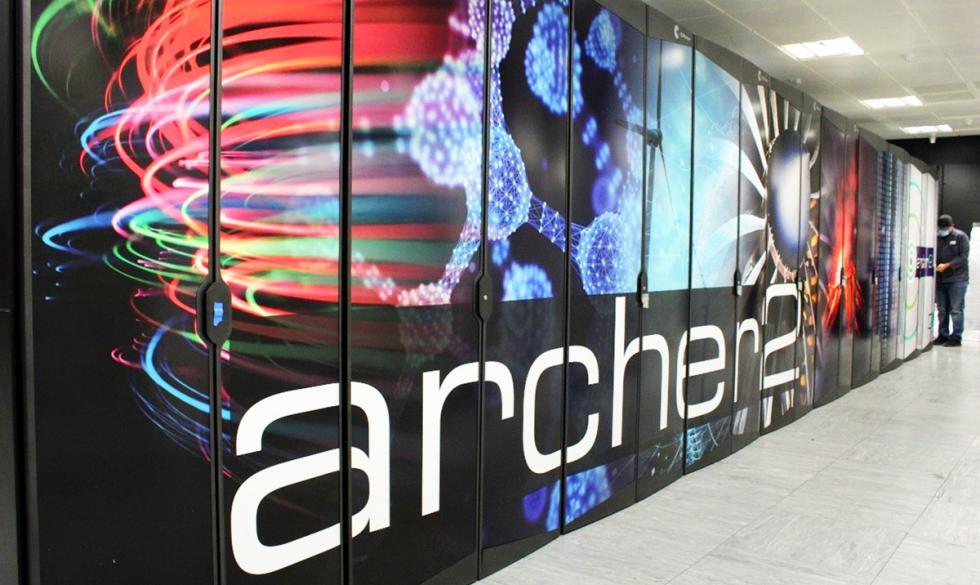
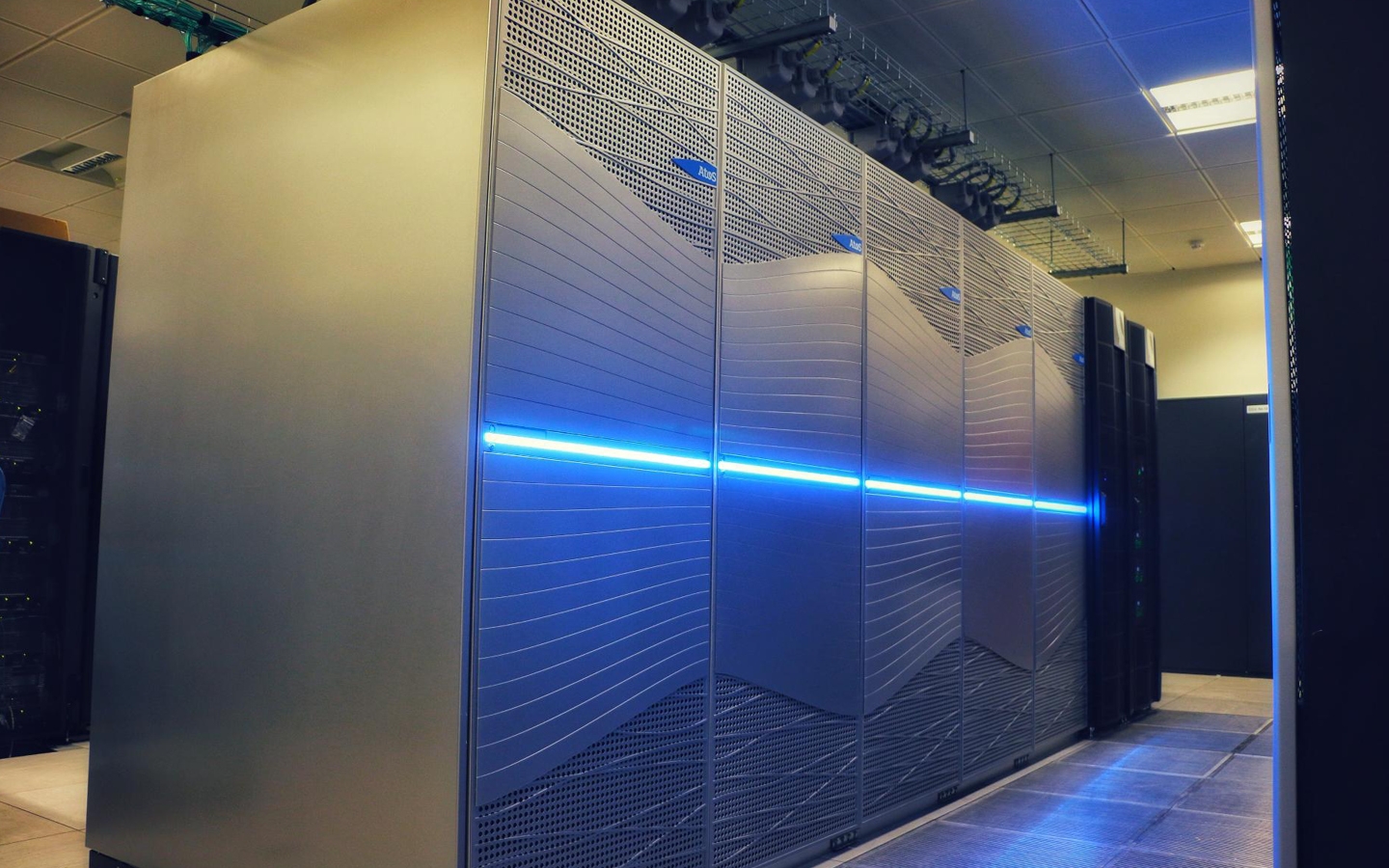
- EPCC (formerly known as Edinburgh Parallel Computing Centre) – the UK’s first national supercomputing centre
- Advanced Computing Facility – a cutting-edge data centre, to host up to £750 million in new national supercomputing investment
- The Bayes Centre – bringing together academia, industry, and startups on data-driven solutions
- The Edinburgh Earth Initiative – advancing multi-disciplinary research on clean energy systems and the circular economy
- Energy@Edinburgh is an interconnected community of 200 researchers across the University, aligned with Industry in recognising that “energy systems and technologies are social as well as technical”. Our research aligns with the Energy Trilemma and feeds into the UN Sustainable Development Goals.
Grid and energy systems
From curtailment to compute
A decision framework and interactive tool to help site AI data centres where curtailed renewable energy is available, reducing grid constraints and accelerating connections. See Dr Wei Sun's lab.
Data centres under market and planning reform
Modelling how data centre growth affects electricity prices, congestion, and investment signals under reformed market designs. See Dr Andrew Lyden's profile.
Probabilistic renewable forecasting
Spatiotemporal forecasting tools to support carbon-aware workload scheduling and grid-aware integration of flexible data centre demand (Dr Amanda Leni).
Cooling and infrastructure
Integration with heat networks
Investigating how waste heat from data centres can be recovered and used in district heating, with analysis of technical, carbon, and social trade-offs. See Professor Daniel Friedrich's profile.
Cooling and water infrastructure
Development of a design tool for assessing cooling and water demands at the planning stage, and a pre-commercial device that uses computational heat for self-cooling, eliminating the need for public water abstraction. See Dr Giulio Santori's profile
Location, governance, and community
Green SCEnEry
A simplified scoring framework for data centre location, assessing Social, Carbon, Energy, and Environmental impacts – designed for use by councils and non-technical decision-makers See Dr Ian Molnar and Dr Melis Sutman's profiles.
Data centre governance
Comparative legal analysis of how regulatory capture, catch-up, and public participation shape data centre accountability across four jurisdictions: the US, China, France, and Chile. See Dr Michael Picard's profile.
Community impact and benefits
Research into public opposition, community benefit schemes, and how lessons from renewable energy siting can be applied to data centre development. See Professor Dan van der Horst's profile
Expertise
Showing all in Data centres